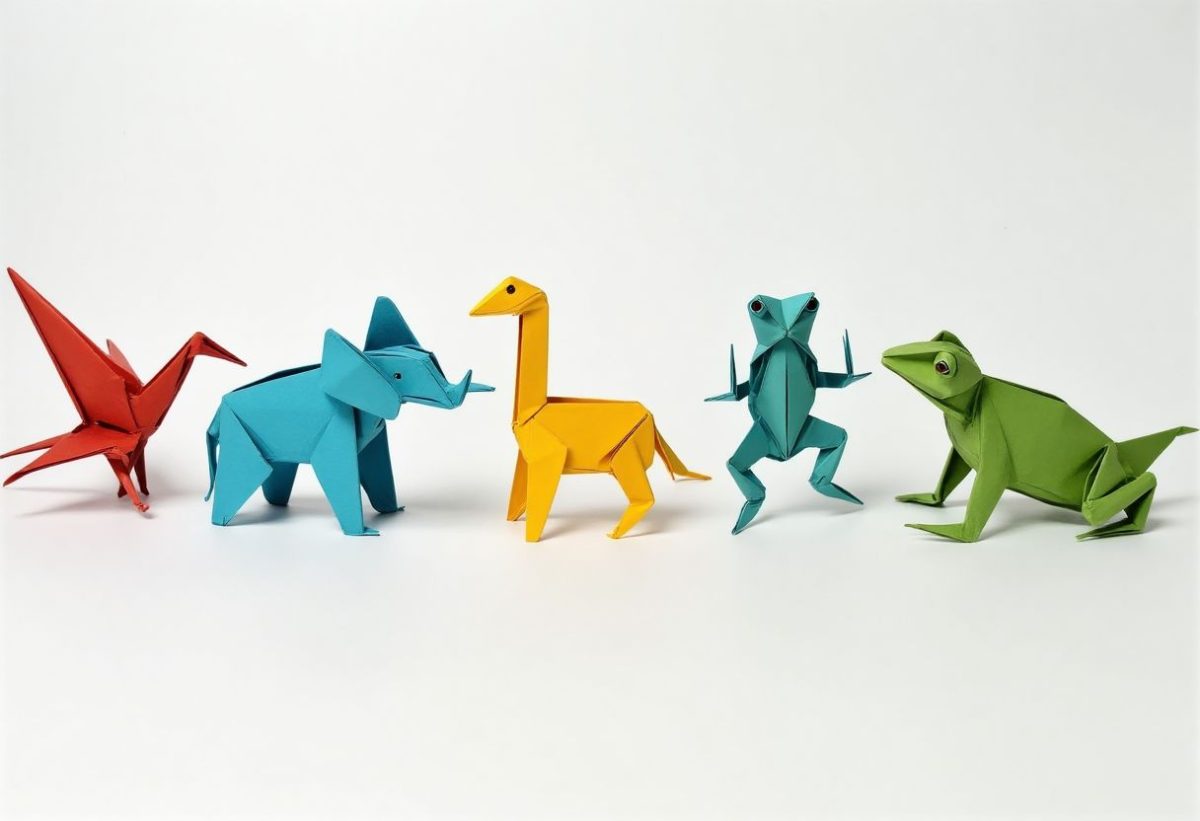
The art of folding paper, or origami, is an ancient practice that has its roots in Japan, the land of the rising sun. While traditional origami is well-known for its flat and elegant models, 3D origami has gained popularity due to its complex shapes and impressive structures. So, what are the differences between these two forms of paper art?
History of Origami
Origami is the art of folding paper to create shapes that range from the simplest, like the famous paper fortune teller, to the more complex requiring a certain dexterity. The term “origami” comes from the Japanese words “oru” (to fold) and “kami” (paper). Traditionally, this art uses square sheets of paper, generally without cutting or glue, to create a multitude of models.
Although origami is often thought of as being solely Japanese, its origins can also be traced back to China. However, it is in Japan that this art truly flourished and became deeply integrated into the culture, becoming a symbol of creativity and meditation. Modern folding techniques continue to evolve, incorporating new methods such as wet folding, popularized by Akira Yoshizawa.
Characteristics of Traditional Origami
Materials Used: Paper and Kami
The choice of paper is crucial for the success of a model. Kami paper is the most commonly used due to its lightness and ease of folding. However, other types of paper, such as tissue paper, kraft paper, or even recycled paper, can also be used to vary textures and colors.
Folding Techniques: Basic Folds
The foundations of origami rely on a few fundamental folds such as the mountain fold, valley fold, or accordion fold. These techniques allow for the creation of models ranging from animals to paper flowers. Origami paper folding is often taught to children to develop their creativity and fine motor skills.
Exploration of 3D Origami
Definition and Characteristics of 3D Origami
3D origami differs from traditional origami in that it often uses an assembly of several individually folded pieces of paper to create three-dimensional structures. This is also known as modular origami. These creations can be as simple as vases or as complex as animal sculptures, as proposed by papercraft panda.
Advanced Folding Techniques
To create 3D origami models, it is essential to master more advanced folding techniques, such as box-pleating and action origami. These techniques allow artists to create massive and interactive works, like the famous jumping origami frog.
Comparison Between Traditional Origami and 3D Origami
Differences in Technique and Complexity
| Characteristics | Traditional Origami | 3D Origami |
|---|---|---|
| Number of Pieces | One single sheet | Multiple modules |
| Complexity | Often simple to moderate | Often complex |
| Use of Glue | Rare | Sometimes necessary |
Impact on Creativity and Learning
Whether for a simple model or a complex structure, origami encourages patience, concentration, and imagination. Children, in particular, can benefit from this art by developing their cognitive skills and sense of precision. 3D origami, due to its complexity, can be more challenging for adults and experienced enthusiasts.
Having Fun with Origami
How to Practice and Learn Origami and 3D Origami
For those who wish to get started in this art, many resources are available, including books like “Mindful Origami” or origami tutorial videos. These resources provide step-by-step instructions for various models, from the origami lily flower to more complex structures.
Creative Project Ideas for Children and Adults
Origami projects can be varied and fun, ranging from simple models for children like the paper fortune teller to more elaborate creations for adults. Whether to create a party decoration, a personalized gift, or simply for the joy of folding, origami offers endless possibilities.
Resources and Tutorials to Get Started with Folding
For those who wish to deepen their practice, many online sites offer free or paid origami patterns. Social media and dedicated forums also provide a platform to share creations and tips with enthusiasts around the world.