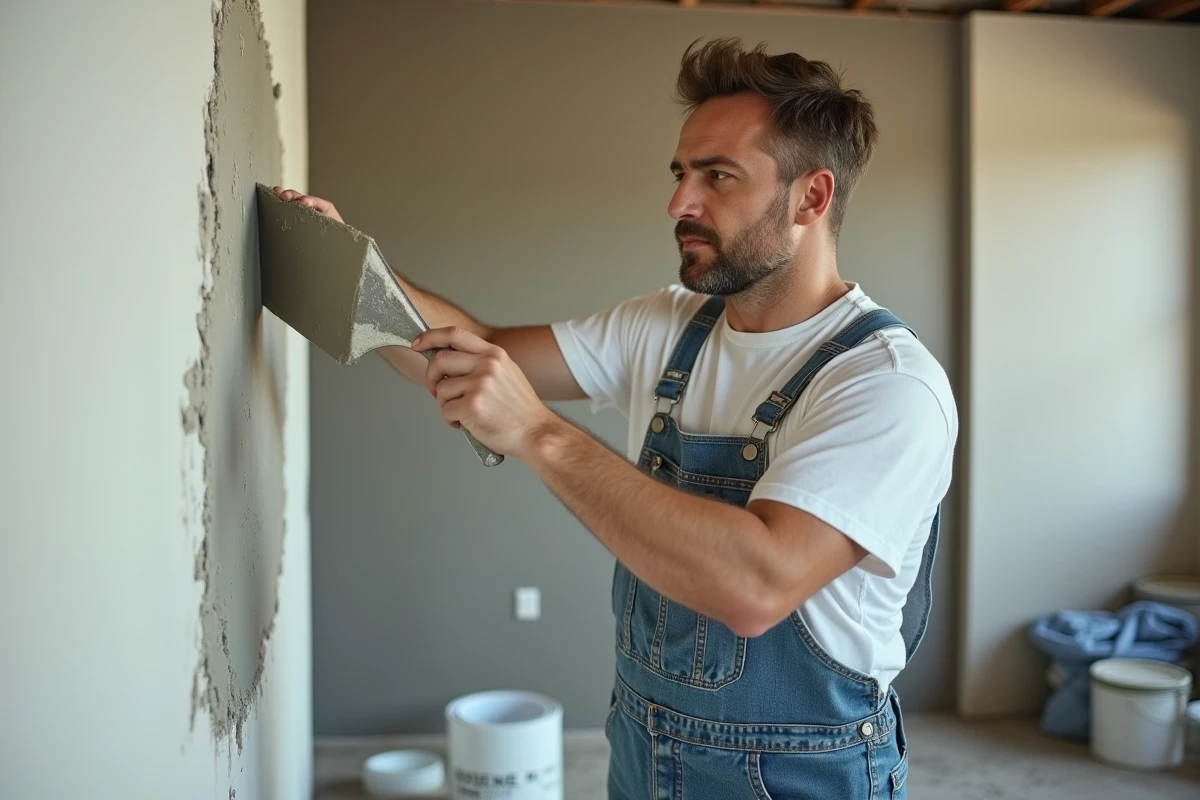
Interior renovation is not just about choosing a paint color or comparing quotes. Projects that go off track almost always share the same flaw: a rushed technical phasing, materials specified without checking their compatibility, and a lack of knowledge about recent regulatory constraints on air quality and carbon performance.
Technical phasing of interior renovation work: the order that avoids rework
An interior renovation project follows a strict logic of trades. The structural work and waterproofing always come before the finishing work. Reversing this sequence, even partially, leads to costly rework: a coating applied before the electrical conduits are finished will be punctured, and a floor covering glued before a screed is completely dry will peel off.
The standard order we recommend for a complete project respects this progression:
- Demolition, clearing, then installation of networks (plumbing, electricity, ventilation) before any permanent partitioning.
- Insulation of walls and installation of drywall, followed by joint treatment and painting of ceilings.
- Installation of floor coverings last, once the wet and dusty work is completed, to avoid any deterioration.
- Finishing touches (baseboards, switches, light fixtures) only when the site is no longer producing dust or splashes.
This sequencing seems obvious on paper. In practice, deadline pressure pushes to overlap incompatible steps. A laminate floor installed while the drywall joints are still wet absorbs ambient moisture and warps within weeks.
To find information on maisonkalixo fr via Zen et Déco, simply consult the detailed sheets by type of work, which precisely outline this sequence trade by trade.

Indoor air quality and labeling of renovation materials
The choice of materials is no longer limited to aesthetics or budget. The Indoor Air Emissions labeling (rated from A+ to C) has become a common specification criterion for paints, adhesives, floor coverings, and particle boards used in interior renovation.
A product rated A+ emits a very low level of volatile organic compounds (VOCs) after installation. A product rated C emits significantly more. The difference is measurable and has a direct impact on the air quality of the home in the weeks following the project.
We observe that the majority of consumer articles merely mention “eco-friendly paints” without specifying what this term covers. The Indoor Air Emissions label, on the other hand, is based on standardized tests in a testing chamber. Checking this label on each product (tile adhesive, underlayment, engineered wood) is a simple reflex that protects the health of the occupants.
Biosourced materials and FDES sheets
To go further, the Environmental and Health Declaration Sheets (FDES) and Product Environmental Profiles (PEP) allow for comparison of the carbon impact of different systems. Comparing the carbon footprint of a drywall partition with a partition made from biosourced material through these sheets provides an objective choice element, beyond just the price per square meter.
Ademe and CSTB encourage this life cycle approach. Some online configurators now integrate this data for interior insulation, simplifying comparison for non-specialist project owners.
Dry systems and prefabrication to limit nuisances in interior construction
Dry construction techniques transform the management of a renovation project in an occupied home or condominium. Hollow-core partitions, technical floors, and clip-on lining systems eliminate drying times and significantly reduce dust production.
A dry project notably reduces the intervention duration compared to a traditional project with wet coatings and poured screeds. The benefit is twofold: less disturbance for neighboring occupants, and an almost zero risk of defects related to residual moisture.
This approach requires precise planning in advance. Panels and prefabricated elements must be custom-sized, which requires rigorous metric surveying. An error of a few millimeters on a clip-on lining cannot be easily corrected like a coating that can be reapplied.
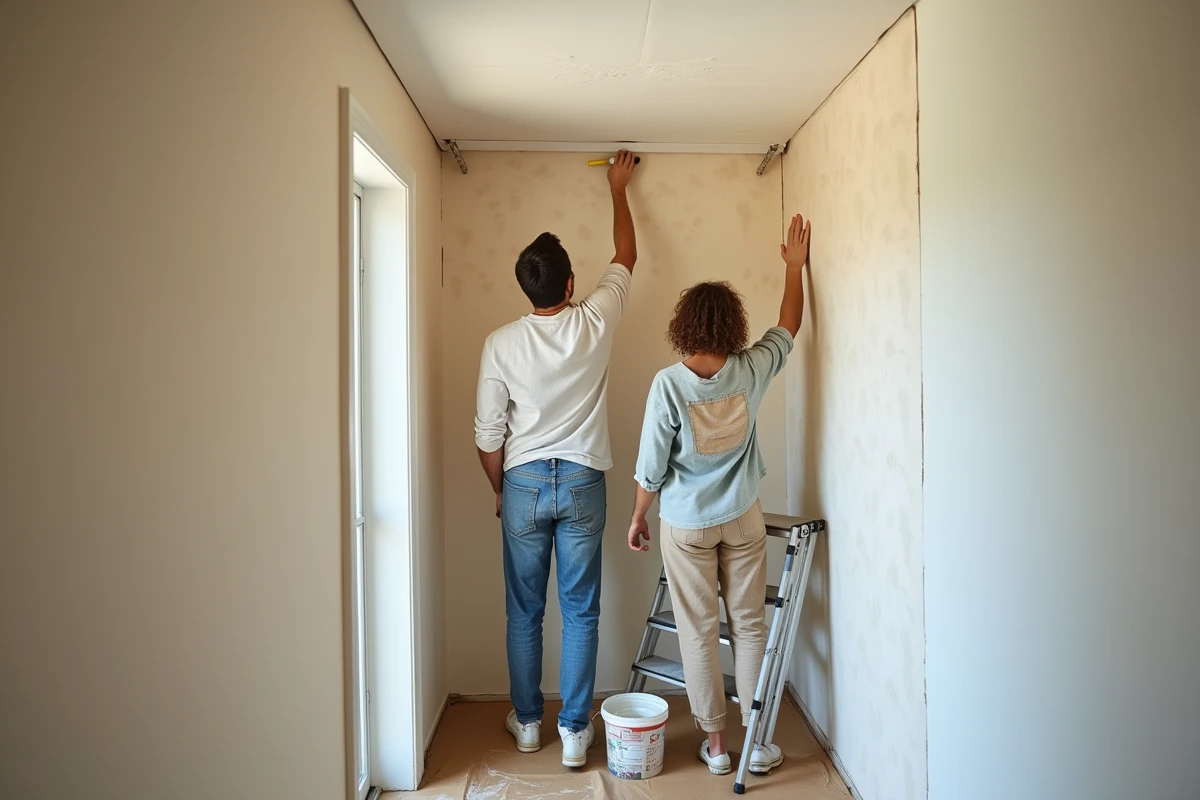
Interior renovation budget: items that quotes often overlook
Standard quotes list materials and labor. They often omit items that weigh heavily on the final budget of the project.
- Disposal of rubble and construction waste: in urban areas, renting a dumpster and professional waste disposal fees represent a significant cost, rarely itemized in the initial quote.
- Protection of areas not involved in the work: tarps, masking adhesives, floor protection films. In a project lasting several weeks, these consumables accumulate.
- Asbestos or lead diagnosis before work, mandatory in homes built before a certain date. Its absence halts the project and exposes to penalties.
Allowing a margin in the total budget remains the best protection against unforeseen events. An electrical network that does not comply discovered during clearing, a beam attacked by wood-eating insects, a moisture issue masked by an old lining: these situations are common and rarely predictable before the demolition phase.
Critical reading of a renovation quote
A quote that displays a total price without itemization by category (supply, installation, substrate preparation) does not allow for comparison. We recommend always requesting a detailed breakdown of measurements, the unit price of materials, and the hourly rate for labor. This transparency facilitates negotiation and allows for quick identification of an overestimated item.
Successful interior renovation relies on three pillars: a respected phasing without shortcuts, materials chosen based on measurable criteria (health labeling, FDES sheets), and a budget that includes invisible items. Mastering these technical fundamentals avoids the majority of disputes and additional costs that we observe on poorly prepared sites.