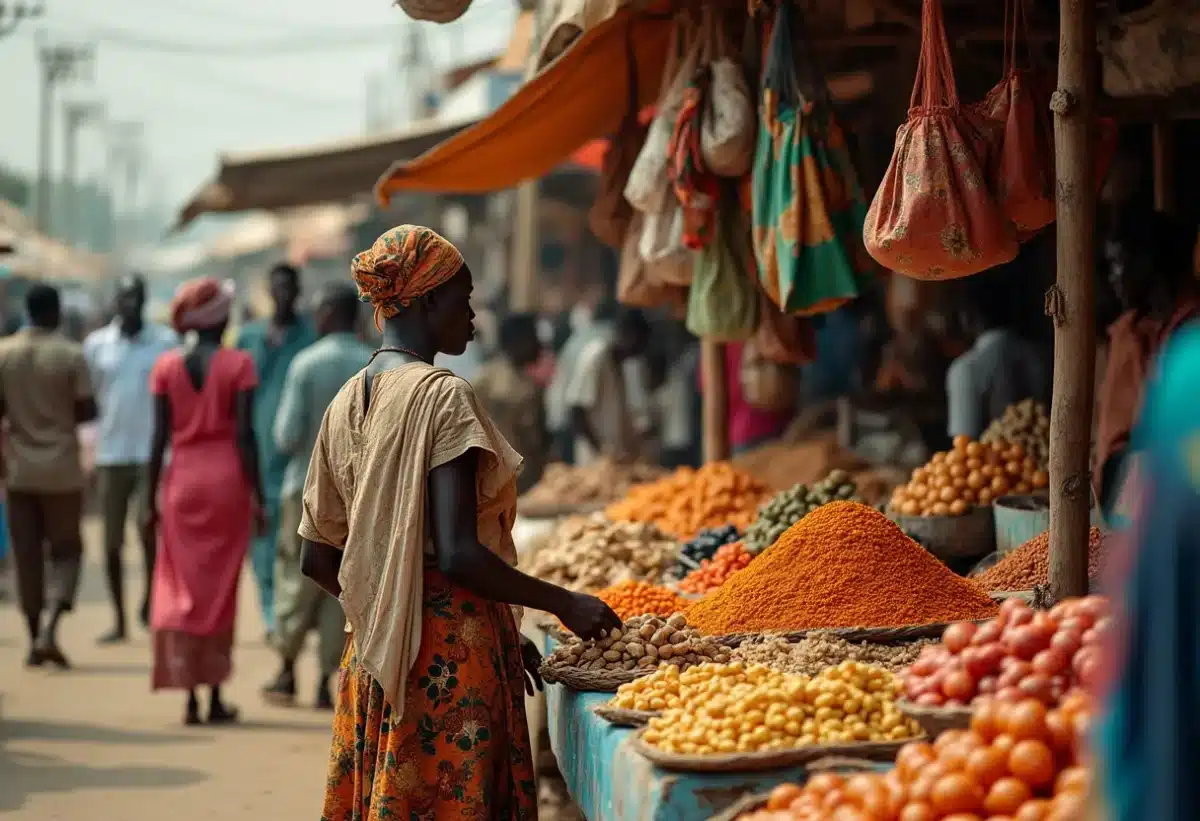
Senegal, located on the west coast of Africa, stands out with a rapidly growing economy, marked by swift urbanization and diversification of its economic sectors. Dakar, the capital, is transforming into a regional hub for business and finance, attracting investors and entrepreneurs.
This emerging prosperity comes with significant challenges. The cost of living is rising, particularly concerning housing and food. Although opportunities are emerging in agriculture, information technology, and renewable energy, obstacles such as inadequate infrastructure and high unemployment hinder development.
Cost of Living in Senegal: Analysis of Expenses and Purchasing Power
Senegal, situated in the westernmost part of the African continent, is experiencing moderate inflation at 6.1% in 2023, according to World Bank data. However, this inflation directly impacts the purchasing power of residents, especially in Dakar, where nearly a quarter of the Senegalese population lives.
Main Household Expenses
- Housing: rental prices in the capital are rising, making access to housing more difficult for middle-income families.
- Food: staple goods, such as rice and oil, are experiencing price fluctuations, exacerbating food insecurity.
- Transport: transportation costs, essential for daily commuting, are also increasing, further impacting households’ disposable income.
Purchasing Power and Average Salary
The average salary in Senegal is estimated at around 150,000 FCFA per month. This amount, well below urban necessities, does not allow many Senegalese to adequately meet their needs. The unemployment rate hovers around 24%, a concerning statistic that highlights the difficulties faced by the working population.
Access to Basic Services
The situation is even more complex in rural areas, where only 43% of the population has access to electricity, according to the National Agency for Statistics and Demography (ANSD). These disparities exacerbate inequalities between urban and rural areas, posing a major challenge for balanced development in the country. The external debt, which quadrupled between 2016 and 2021, limits budgetary maneuverability to improve these services.
Economic Opportunities and Challenges: Promising Sectors and Obstacles to Overcome
Senegal is at a decisive turning point in its economic development. The Emerging Senegal Plan (PSE), established in 2014, aims to transform the Senegalese economy through a series of structural reforms. The goal is to strengthen economic growth and reduce poverty through massive investments in infrastructure and strategic sectors.
Promising Sectors
- Hydrocarbons: hydrocarbon production, expected by mid-2024, could generate substantial revenues. The Sangomar and Grand Tortue Ahmeyim (GTA) sites are projected to yield 15 and 24 billion dollars in cumulative revenues, respectively, according to the Strategic Orientation Committee for Oil and Gas (COS-Petrogaz).
- Renewable Energies: Senegal is also focusing on the development of renewable energies. Solar and wind projects, supported by international partners, aim to diversify the energy mix and reduce dependence on fossil fuels.
- Digital: the technology sector, which is rapidly expanding, offers significant opportunities. Local start-ups are innovating and attracting foreign investments, contributing to job creation and the modernization of the economy.
Obstacles to Overcome
Despite these promising prospects, several challenges remain. The unemployment rate, hovering around 24%, remains a major obstacle. Creating quality jobs and improving vocational training are essential to meet the needs of the labor market.
The transparency in the management of extractive resources is another issue. The Extractive Industries Transparency Initiative (EITI) plays a key role in ensuring that revenues generated from natural resources benefit the entire population.
The unequal distribution of infrastructure between urban and rural areas is a barrier to balanced development in the country. Investments must be directed to improve access to basic services, particularly electricity and clean water, in the most disadvantaged regions.