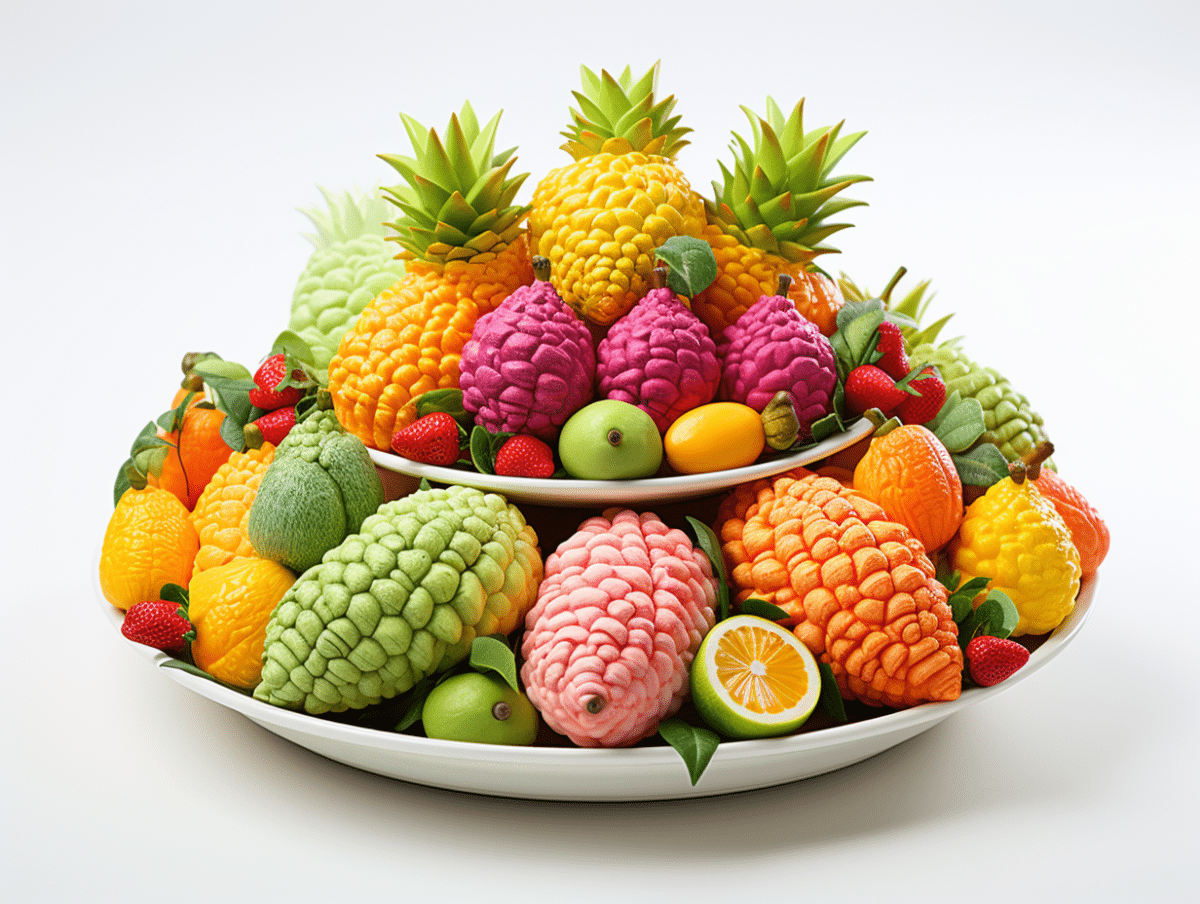
In the culinary world, the quest for new flavors often leads to the rediscovery of exotic fruits with evocative names and surprising tastes. These delights, often unknown to the general public, bring a touch of exoticism and freshness to our plates, expanding our taste palette. They come from distant lands, and their cultivation contributes to biodiversity as well as the local economy. From Asia to South America, passing through Africa, these fruits with sometimes strange appearances and often exquisite flavors deserve special attention for the pleasures they can offer adventurous palates.
Discovering the fruity treasures of the world
Consider the carambola, this star-shaped fruit, whose bright yellow color piques curiosity. Originating from tropical Asia, it weighs about 100 g and measures between 6 to 15 cm. The carambola is the fruit of the carambola tree, or Averrhoa carambola by its scientific name. Its sour variety, less sweet and more acidic, is well-suited for making chutneys or as a side dish in savory dishes, opening a new horizon in exotic cuisine.
The bilimbi, on the other hand, offers an intense tasting experience with its sharp acidity. This fruit, derived from Averrhoa bilimbi, is often used as a condiment or pickled, thus proving to be a choice ingredient in recipes with exotic fruits. Its use transcends borders, finding its place in various culinary preparations, from Asian territories to tropical islands.
Continue with the kiwi, this plump fruit with a brown, thin skin, containing green flesh speckled with small black seeds. Discovered in 1740 by Pierre Nicolas Le Chéron d’Incarville, the kiwi has its origins in southeastern China, far from New Zealand with which it is often associated. The plant Actinidia deliciosa is the one that provides us with these fruits rich in vitamin C. The ‘kiwi gold’, a variety with bright yellow flesh, and the ‘kiwai’, a small fruit the size of an edible cherry with skin, are examples of the diversity that this species holds.
Let’s mention the blue bananas, a botanical curiosity that intrigues and charms. These fruits, with bluish hues, not only bring a unique aesthetic but also a sweet flavor reminiscent of vanilla ice cream. They embody the unsuspected diversity of fruit varieties and enrich the heritage of tropical plants.
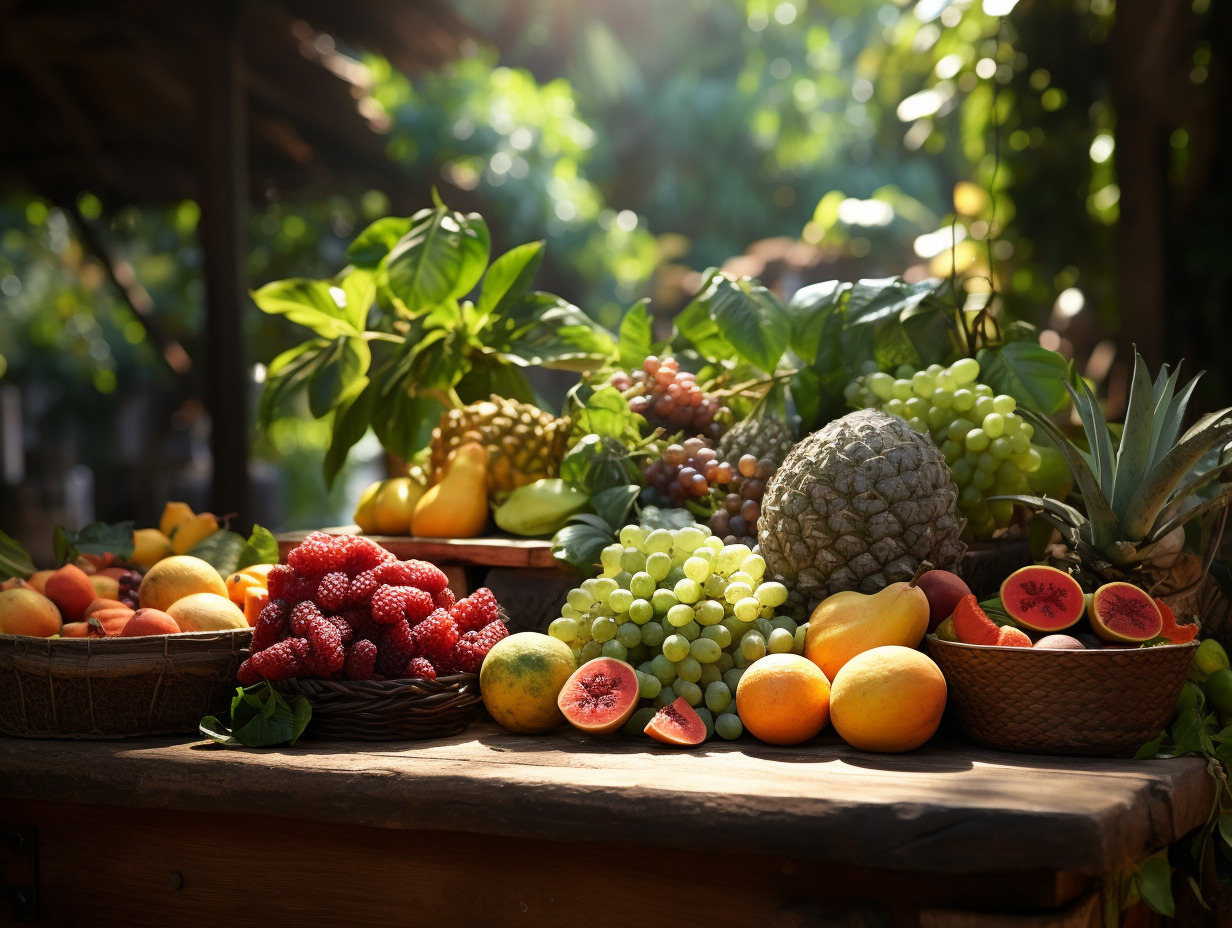
The unsuspected virtues of unknown exotic fruits
The carambola intrigues not only with its star shape but also with its nutritional properties. Consumed sparingly due to potential toxicity, it stands out for its content of vitamin C and antioxidants. These compounds are essential, especially in winter, to strengthen the immune system and combat oxidative stress. However, moderation is key to enjoying its benefits without incurring health risks.
The kiwi, often mistaken for having a New Zealand origin, is truly a gift from China to the global diet. Its high content of vitamin C surpasses that of many citrus fruits, positioning it as a true health ally. Enriched with nutrients, the kiwi supports immune function, contributes to skin health, and promotes iron absorption. It was in 1969 that France began cultivating this fruit, then called ‘Chinese gooseberry’, before it was renamed ‘kiwi’, and recognized for its exceptional virtues.
As for kiwi cultivation in France, it demonstrates the adaptability and acclimatization potential of exotic fruits within temperate climates. This cultivation, which started about fifty years ago, illustrates the ability to integrate exogenous nutrients into the local diet. It paves the way for a diversification of agricultural practices and a rediscovery of healthy exotic fruits on our plates, with products now accessible and appreciated for their contribution to a balanced diet.