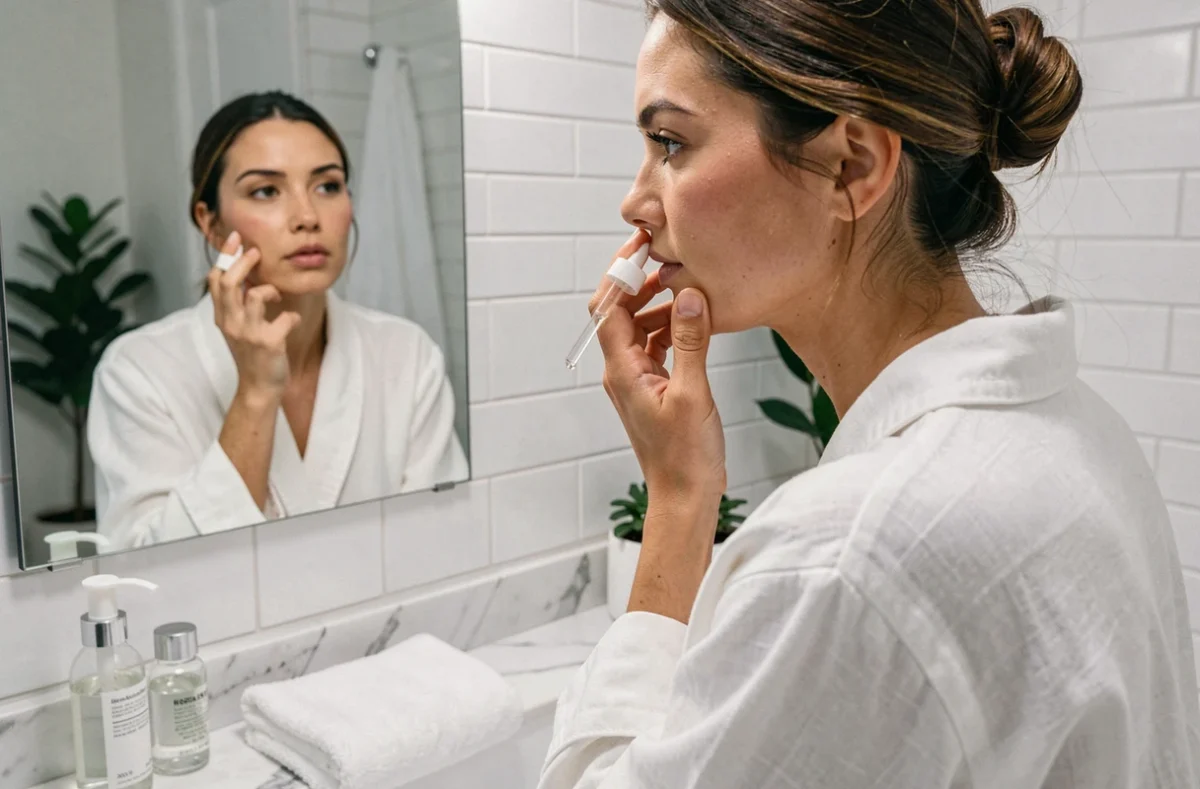
The distinction between “fragrance-free,” “natural” and “hypoallergenic” on cosmetic packaging is based on different regulatory criteria. Confusing these claims can lead to unsuitable beauty routines, particularly for sensitive skin.
European regulations have expanded the list of fragrance substances that must be individually declared on labels above certain thresholds, improving transparency without changing the formulas themselves. Building a reliable daily routine starts with reading the INCI list, not with the promises on the front of the product.
Sensitive-skin routine: decode the INCI label before choosing a product
The claim “fragrance-free” does not rule out every allergenic ingredient. It indicates only that no fragrance composition has been added. Other substances (preservatives, surfactants, plant extracts) can trigger a reaction in reactive skin.
If you have a diagnosed allergy, the only reliable approach is to check the full INCI list with advice from a dermatologist or allergist. Relying on a symbol or marketing claim can lead to poor product choices.
Cosmetic claims are regulated at European level: a promise on the packaging must be truthful and substantiated. A product cannot be credited with characteristics it does not have. A “soothing” or “anti-redness” skincare product must deliver a documented effect. In practice, we find that formulas with shorter ingredient lists often offer the best tolerance profile, simply because they reduce the number of potential contacts with an irritant.
Among Makeup Chic’s beauty tips, filtering by skin type helps you select products based on tolerance criteria rather than seasonal trends.
What the expanded allergen list changes
The expanded list of fragrance allergens that must be declared individually on labels gives consumers a practical tool. More substances are named explicitly, making it easier to spot an ingredient already identified as problematic during a patch test.
This change does not mean that formulas contain more allergens than before. The molecules were already present, but grouped under the generic term “parfum” (or “fragrance”). Transparency has increased, not the risk.
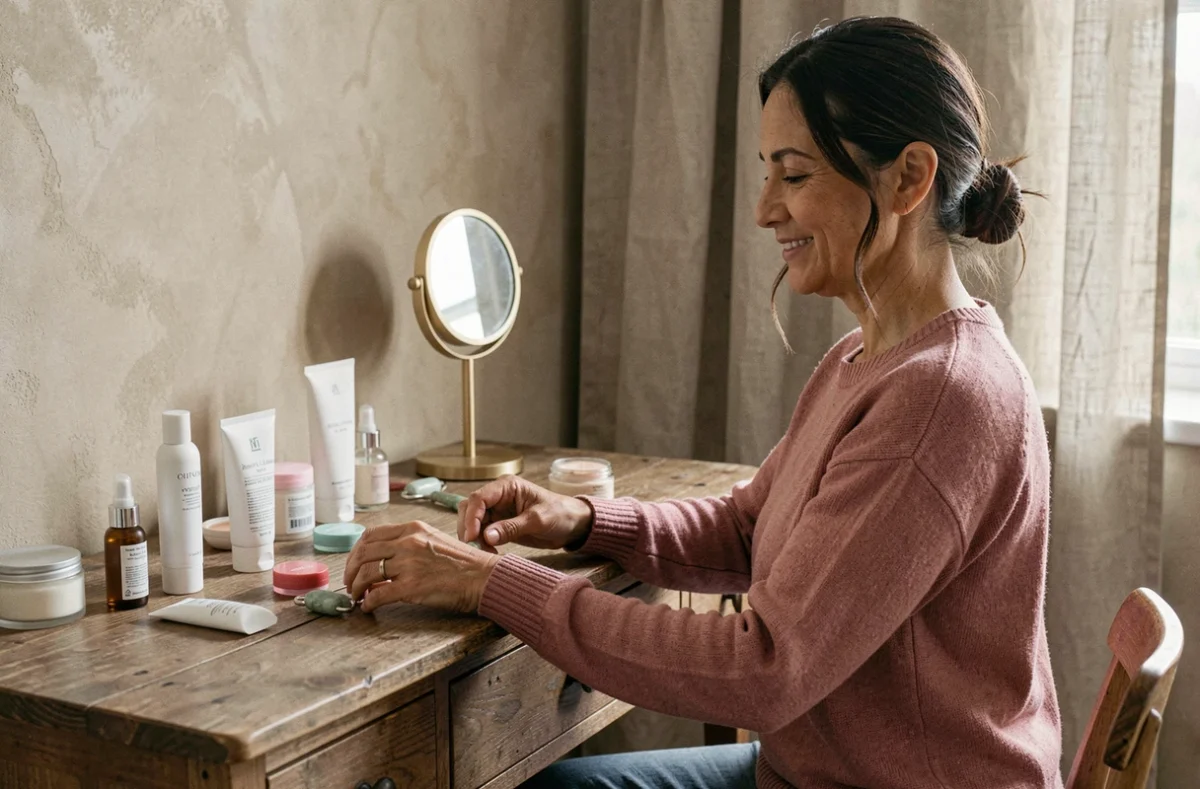
Natural products and organic cosmetics: why “plant-based” does not mean “risk-free”
A plant extract can be just as irritating as a synthetic compound. Lavender essential oil, limonene from citrus fruits and linalool are all documented contact allergens of natural origin. Equating “organic” with “gentle” is an oversimplification that does not hold up when it comes to skin chemistry.
Organic certification (Cosmos, Ecocert, Nature & Progrès) guarantees a production method and a percentage of ingredients of natural origin. It does not guarantee individual tolerance. For sensitive skin, the best approach is to:
- Check the INCI list for known allergens, even in certified organic products, focusing on the last ten ingredients (often fragrance ingredients and preservatives)
- Test each new skincare product on a small area (the crook of your elbow or behind your ear) for 48 hours before applying it to your face
- Limit the number of active products in your daily routine to two or three so you can quickly identify the source of any reaction
European regulations on microplastics are being phased in across the cosmetics sector. This gives you another selection criterion: check whether an exfoliating product or makeup primer contains solid plastic particles, which are gradually being withdrawn from the market.
Build a daily three-step beauty routine for your face
Using too many products is the most common mistake. Layering serum, essence, ampoule, cream and oil on skin that does not need them weakens the skin barrier instead of strengthening it.
Three steps are enough for a balanced complexion every day: cleanse, moisturise, protect. Cleansing removes impurities and excess sebum without stripping the skin. Moisturising maintains the hydrolipidic film. Sun protection (even in winter, even on cloudy days) helps prevent premature ageing and pigmentation spots.
Adapt these steps to the season
In spring and summer, it is worth switching to lighter moisturising textures. A gel-cream is a better choice than a rich cream for a face that sweats more. Increase your sun protection factor as soon as you spend more than around 30 minutes in the sun.
In cold weather, the skin barrier is exposed to wind and temperature changes between heated interiors and the outdoors. Applying a more occlusive balm in the evening to damp skin helps compensate for transepidermal water loss without adding more layers of product.
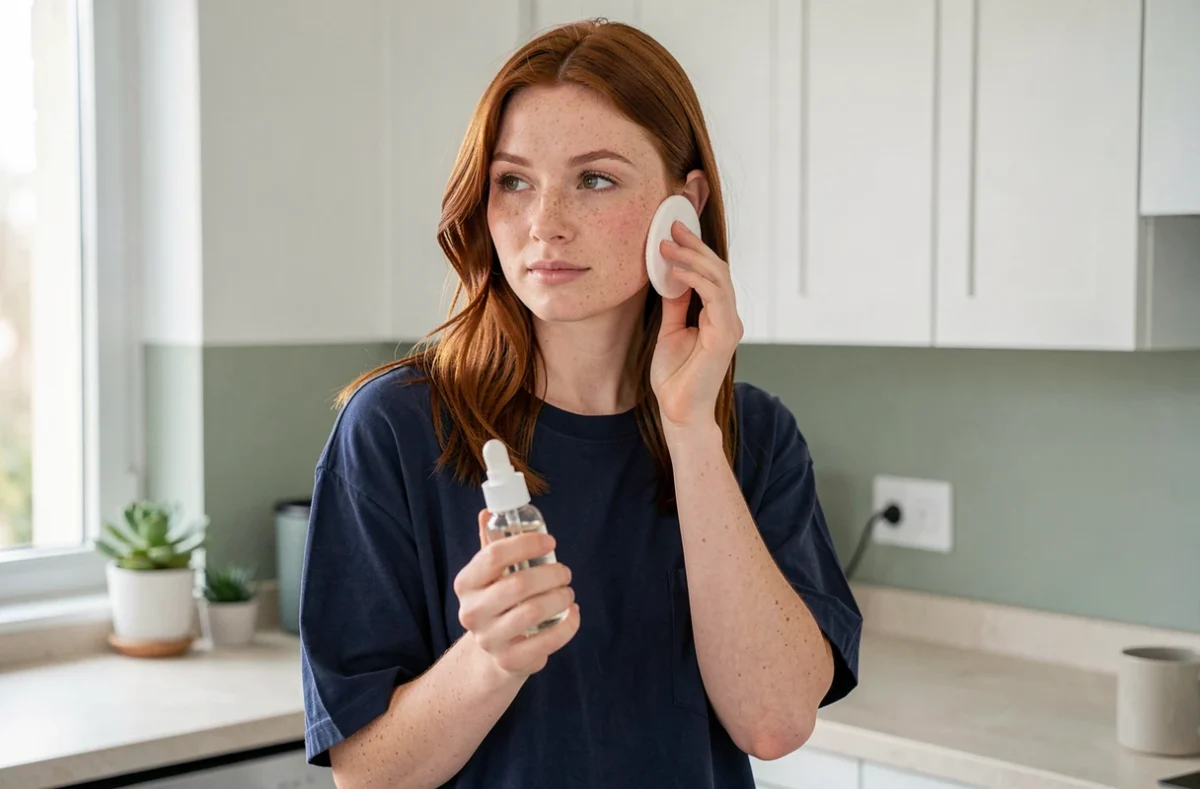
Light makeup and sensitive skin: which textures to choose
Water-based liquid foundations are less irritating than highly pigmented formulas loaded with heavy silicones. Light makeup reduces the risk of clogged pores and makes makeup removal easier. If you choose the wrong cleanser, removing makeup can be the most irritating step of the day.
We recommend choosing multifunctional products (BB cream with SPF, tinted moisturising balm) to limit the number of applications to your face. Fewer layers mean less rubbing, fewer interactions between formulas and a lower risk of cross-sensitisation.
- Choose a makeup remover without denatured alcohol or sulphate surfactants (SLS, SLES), two common irritants in budget micellar waters
- Replace cotton pads with a washable microfibre cloth, which removes makeup with less mechanical friction on fragile skin
- Apply foundation with your fingers or a clean brush rather than a damp sponge, which can harbour bacteria after a few uses
An effective beauty routine is not measured by the number of products lined up on the shelf. It is measured by how stable your skin remains over several weeks: no tightness, an even complexion and no inflammatory flare-ups. If a product shows no visible results after four to six weeks of regular use, it probably adds nothing to your routine and can be removed without regret.