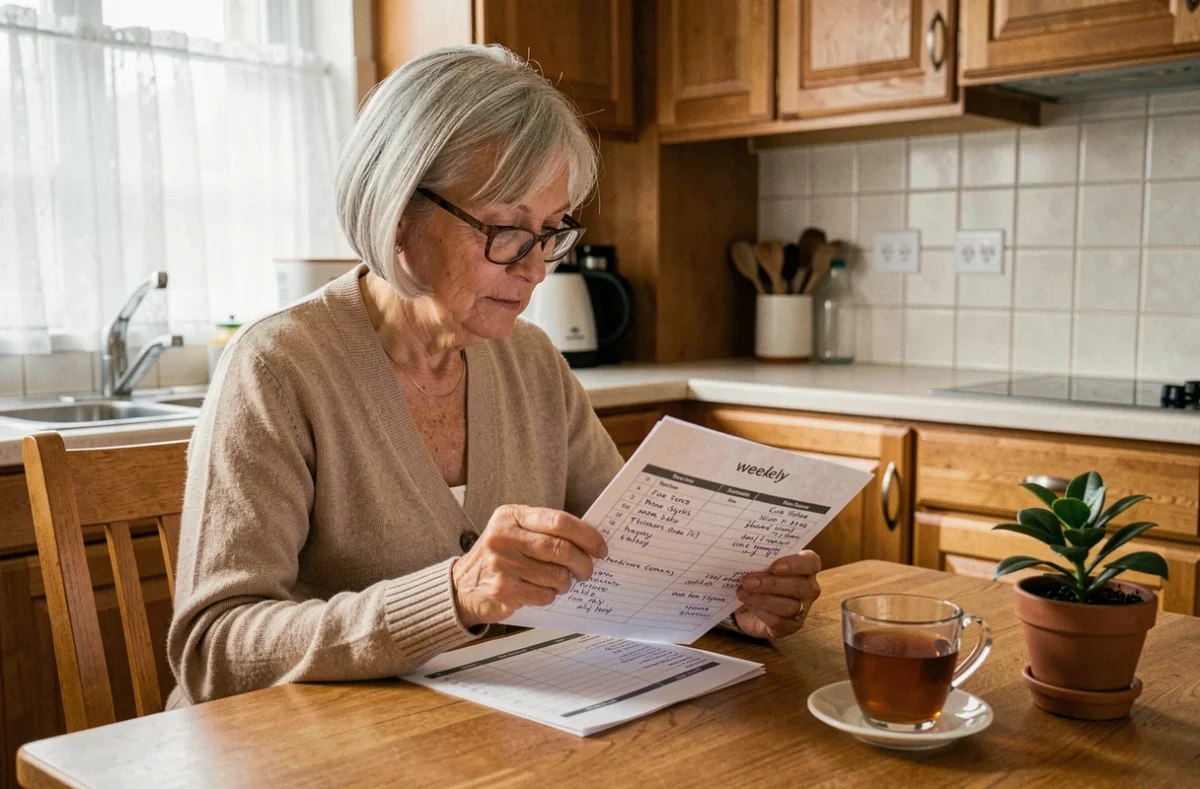
When a home caregiver visits every day at variable times, knowing precisely who intervenes and when becomes a structuring reference. The Logisfil schedule meets this need by providing seniors with direct access to interventions recorded through remote management, from their home. No need to call the organization or sift through a paper notebook: visits are timestamped, viewable online, and verifiable by the beneficiary or a relative.
Logisfil Remote Management and Daily References: Why the Schedule Structures the Day
Have you ever noticed that a day without fixed appointments can seem endless? For an elderly person living alone, the absence of time references promotes temporal disorientation. The arrival of a caregiver at regular times creates a concrete anchor in the day.
The role of the Logisfil schedule goes beyond just a list of hours. Each intervention is logged upon the arrival and departure of the caregiver, generating a consultable history. The beneficiary verifies themselves that the visits correspond to the care plan. This traceability transforms a service that is endured into a service that is controlled.
When a housekeeper clocks in via the device or smartphone, Logisfil records the date, time, and duration. The senior (or their caregiver) can find this data in the online beneficiary space.
If a visit is missed or if the duration seems too short, they have factual evidence to discuss it with the organization. Before using the Logisfil schedule for seniors, many beneficiaries had no simple way to cross-check what had been done in their homes.
Logisfil Beneficiary Space: What the Connection Allows and What It Does Not
The beneficiary space operates with a username and password provided by the home care organization. The password often includes the beneficiary’s date of birth, making it easier to remember.
Password reset must go through the organization, not the beneficiary. In case of lost credentials, one must contact the service provider. The recovery time varies from a few hours to several days depending on the responsiveness of the service.
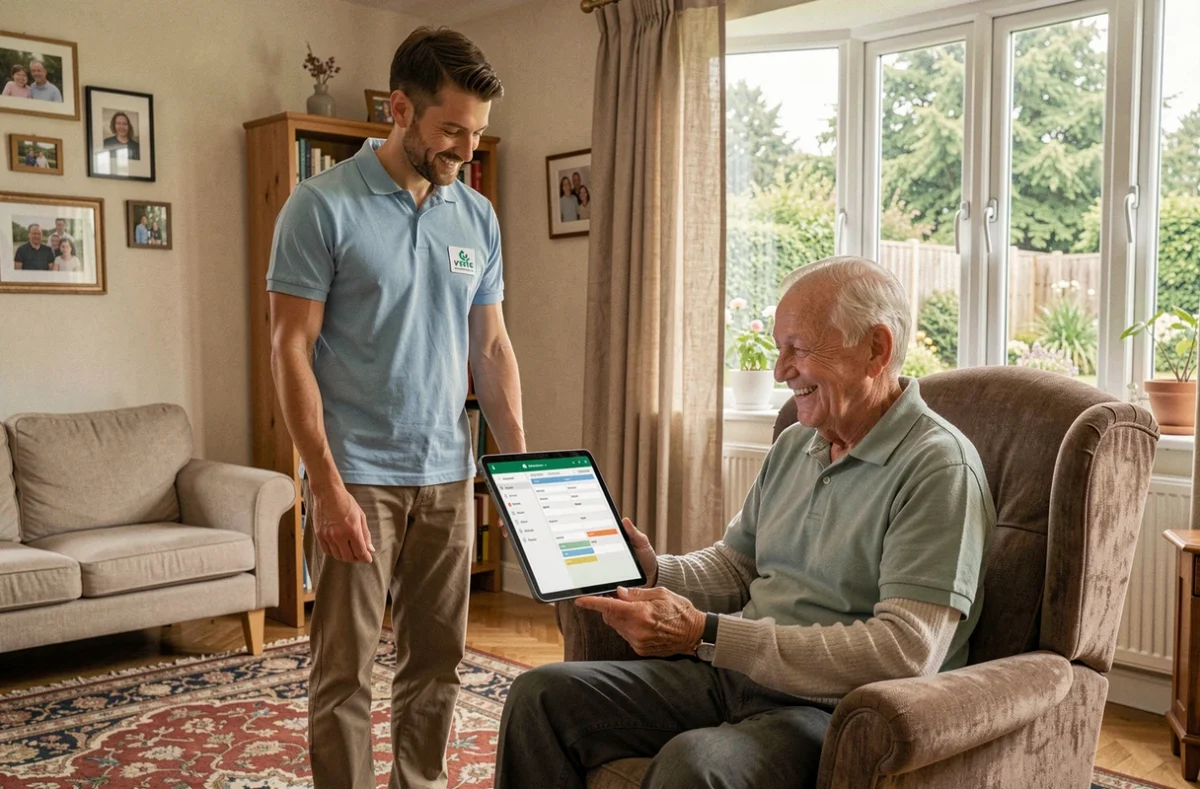
Once logged in, the beneficiary accesses a summary of the validated interventions. They can see:
- The exact date and time of each visit, with the duration recorded by the clocking system
- The name of the assigned caregiver, which allows for identifying any unannounced changes
- Any remarks entered by the home caregiver after their visit
What Logisfil does not do, however, deserves to be clearly stated. The platform does not detect falls or prolonged absences. It does not replace a teleassistance system with a call button or motion sensors. A schedule that shows regular interventions reassures but does not constitute a security monitoring system.
Complementarity Between Logisfil Schedule and Teleassistance for Home Care
Discussing “better living at home” without addressing safety between visits would be incomplete. The schedule covers the hours when someone is present. What happens the rest of the time?
A senior receiving two hours of daily assistance remains alone for the remaining twenty-two hours. Logisfil and teleassistance serve two distinct and complementary functions. The former tracks the scheduled human support. The latter ensures constant monitoring in case of an incident.
Current teleassistance devices offer bracelets or pendants with call buttons, automatic fall detectors, and sometimes motion sensors that alert if no activity is detected for an abnormal duration. None of these functions exist in Logisfil.
For a family caregiver, combining both tools provides a more complete view. The Logisfil schedule confirms that the planned assistance indeed took place. Teleassistance covers the times when no one is there. One without the other leaves a blind spot.
Reform of Home Autonomy Services: What Changes for Schedule Monitoring
The creation of the unique category of home autonomy service (SAD), resulting from Article 44 of the LFSS 2022, modifies the coordination around the beneficiary. A single point of contact is now responsible for centralizing information and serving as the entry point for the user.
The decree of July 13, 2023, sets the specifications, with compliance from organizations expected around mid-2026 and strengthened oversight by departments starting in 2027. For Logisfil users, this evolution has a practical consequence: the single point of contact becomes the main interlocutor in case of issues with the schedule.
Before this reform, a beneficiary could juggle between several organizations (housekeeping on one side, nursing care on the other) without shared coordination. The SAD model aims to group these interventions under one organizational roof. The remote management schedule like Logisfil fits into this logic of centralized traceability, even if the tool remains specific to each organization.
Delegating Logisfil Access to a Caregiver: Conditions and Limits
A senior who is not comfortable with digital tools can delegate the consultation of the schedule to a child or relative. Some organizations allow sharing of login credentials for the beneficiary space.
This delegation raises the question of personal data protection. The information visible on Logisfil (schedules, names of caregivers, duration of visits) falls under personal data. Access sharing must be validated by the beneficiary and reported to the organization.
In practice, delegation works well when the caregiver lives far away. Checking the schedule remotely allows for verifying the regularity of visits without calling every day. If a visit does not appear, the caregiver can react quickly with the organization.
The Logisfil schedule does not solve everything. It does not compensate for isolation between visits or the limitations of insufficient assistance in hourly volume. Its real contribution lies in the transparency it introduces into a service relationship that is often opaque, where the beneficiary regains a form of control over what happens in their home.