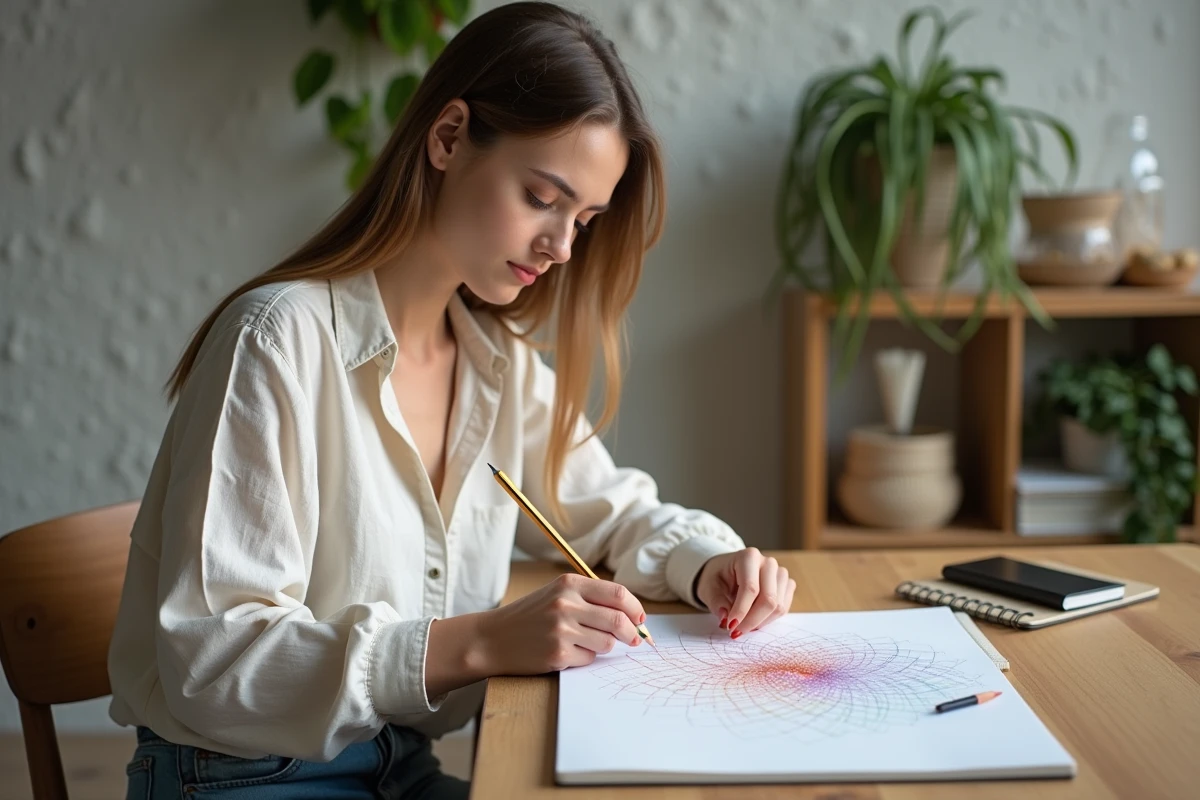
The attentive observation of a repetitive structure influences concentration more profoundly than a simple attempt to clear the mind. Some approaches combine conscious reflection and automatic gestures to trigger an unprecedented state of calm. Practitioners often experience a shift between control and letting go, without ever following a rigid protocol.
A circular frame does not impose perfect symmetry: imperfect repetition sometimes produces more soothing effects. The foundations of this practice rely on direct experience, without a hierarchy of skills. Progress is measured less by precision than by the ability to settle into the moment, pencil in hand.
Why drawing mandalas invites meditation and creativity
The drawing of mandalas has this rare ability to suspend the passage of time. A simple circle, both framed and open, welcomes lines and patterns that intertwine freely. More than an ornament, each repeated gesture, each variation, mobilizes attention and brings us back to the heart of the present moment. Relying on the constancy of movement, this practice cultivates a mindfulness that soothes the mind. The flow of thoughts slows down, the contours of the lines become an inner experience, almost tangible.
The Zentangle method illustrates this approach well. Accessible to all, it offers a graphic vocabulary where repetitive patterns are drawn on small tiles. Here, simplicity reigns, and the notion of error fades away. The barriers to creativity, doubts, perfectionism, and blockages gradually diminish, replaced by an acceptance of the unexpected.
Some concrete benefits emerge for those who try it:
- Drawing promotes well-being and relaxation.
- Creativity amplifies through regularity and a calm management of stress.
Committing to learn energy drawing opens a path to a renewed perception of oneself and the surrounding world. Studies on stress management and personal development praise the positive effects of this practice on mental state. As the hand traces, the mind calms, and creativity settles in, discreet yet persistent, with each repetition.
Discover the basics of energy drawing: materials, gestures, and first lines
To embark on energy drawing, it all starts with the choice of materials. A graphite pencil, a fine marker, lightweight paper: there’s no need to complicate things. The tool extends the hand, and simplicity becomes an asset. What matters is the regularity of the gesture, the attention given to each line, the quality rather than the pursuit of the spectacular.
The first lines invite exploration of shapes, curves, and the rhythm of repetition. The exercises, often derived from structured programs, proportions, volumes, and lines, help grasp how a form emerges, organizes, and then expands. Progress relies on regular practice: even a few minutes a day are enough to build confidence and nurture creative momentum.
No one becomes self-taught by chance. Specialized courses and training guide the gesture and sharpen the eye. Dare to test perspective, play with light and shadows, and organize space on the page. Here are some ideas to explore for varying experiences:
- Alternate techniques: graphite, ink, watercolor, or pastel.
- Try different supports: sketchbooks, loose sheets, or tiles for repetitive patterns.
- Let your intuition guide your creative choices.
The method refines over time through exchanges with teachers or art therapists. Working on creativity also means accepting the unexpected: transforming “mistakes” into resources, recognizing the potential of graphic accidents for new ideas.
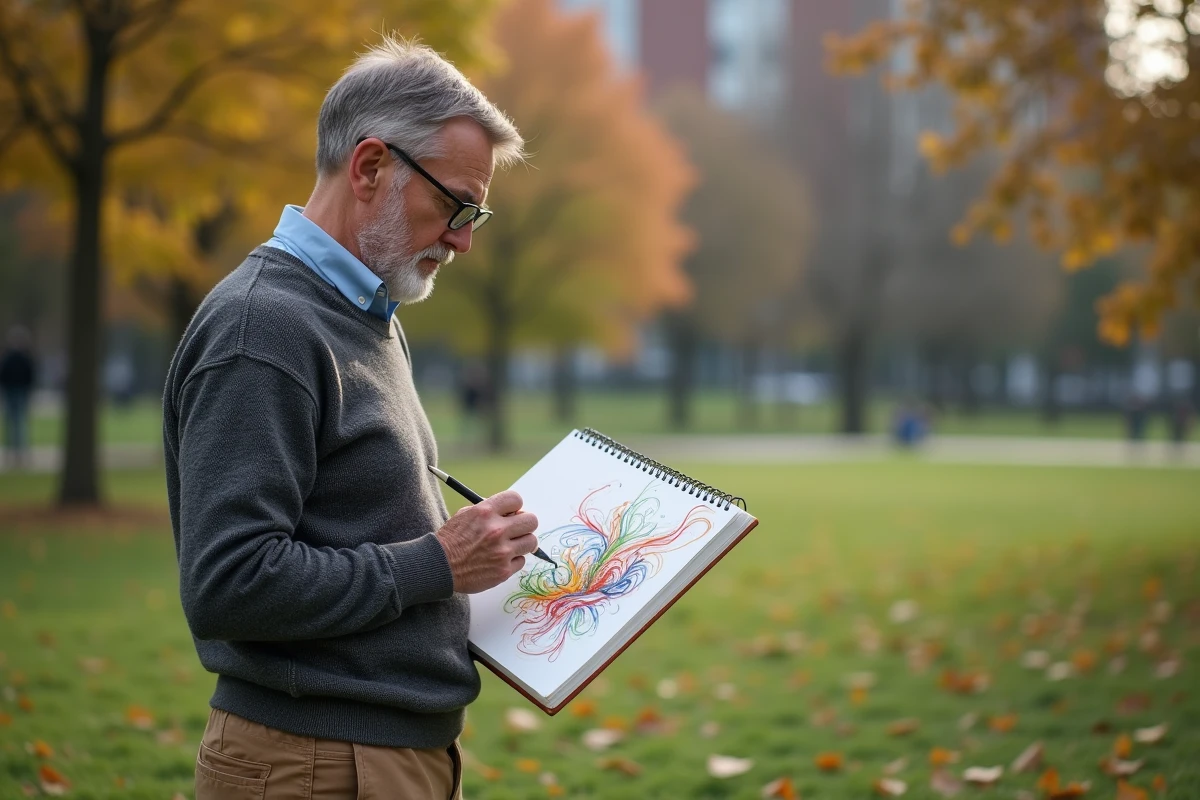
How to explore your creativity while meditating with mandalas
The mandala, a geometric structure that is both familiar and universal, serves as an anchor point to reconnect with the present moment. As the hand repeats the patterns, the mind begins a form of active meditation. This process, at odds with the agitation of daily life, reestablishes a direct connection with one’s mental state and calms the inner flow.
Creating a mandala means accepting to settle in for the long haul, giving time to each step. The patterns gradually take shape, guided more by intuition than by the need to succeed. The sequence of shapes, the alternation of filled and empty spaces, opens a space conducive to exploring one’s creativity, while encouraging stress management and mindfulness. This dialogue between gesture and concentration becomes a complete experience, where the mind relaxes and imagination gains ground.
It is better to favor short sequences, renewed often, rather than rare extended sessions. Dare to vary colors, test new shapes, and accept imperfection. The goal is not performance but the discovery of unsuspected resources. Each drawing becomes a silent witness to your emotions, a concrete proof of your progress and inventiveness. Let the hand converse with the mind: mandala meditation will then establish itself as a fertile ground for unleashing your creativity, session after session.